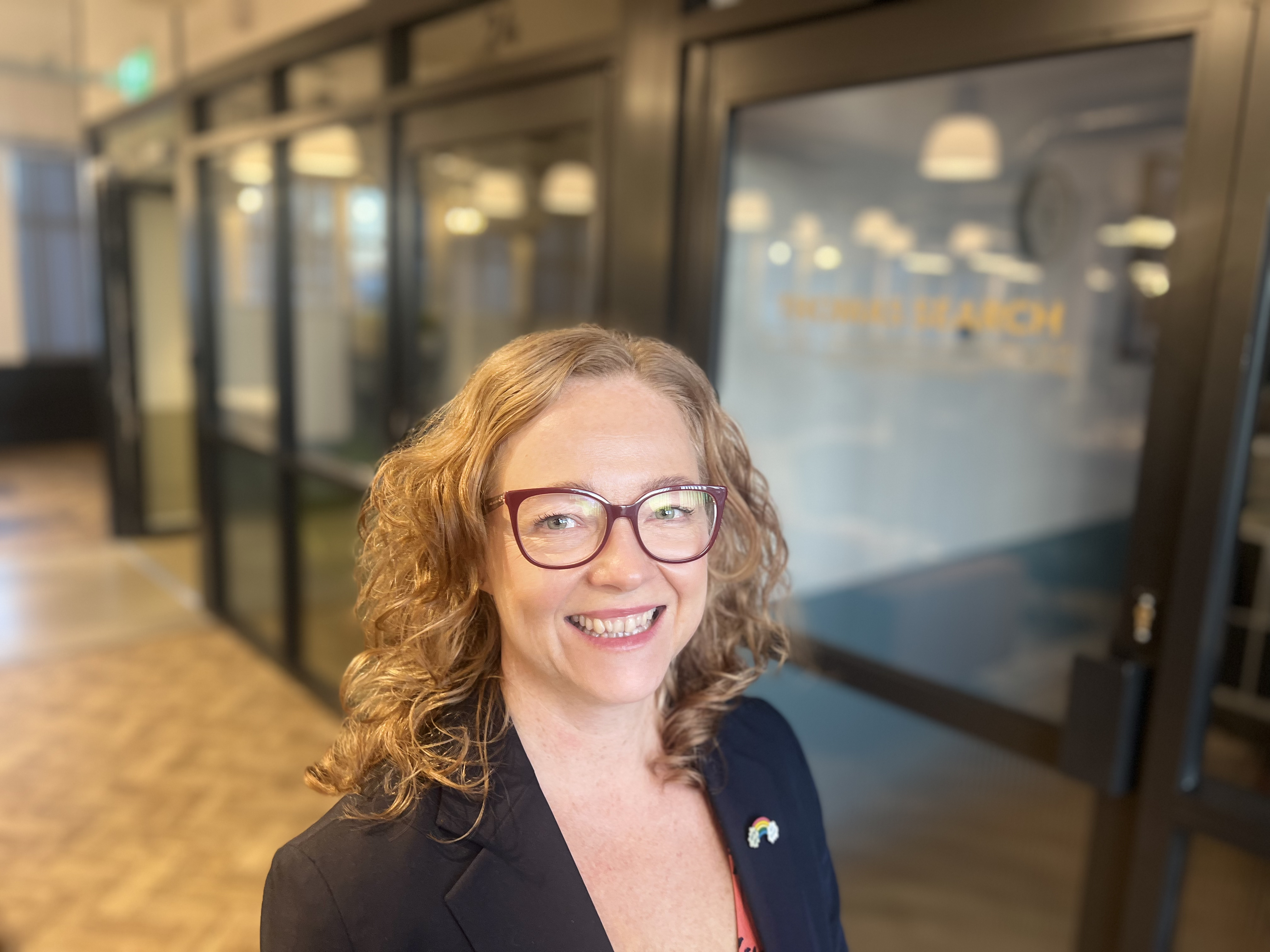
Adie L. Saunders helps people stand out, speak up and be heard. As a business confidence & public speaking coach and speaker she has made it her mission to give people the techniques they need to learn more about themselves and their way of reacting to the world. Adie works with two very specific groups; she supports women working in male-dominated STEM industries and works with both male and female executives on a 1-2-1 basis. Her work is focussed on introducing her clients to tailored made communication techniques aiming to boost their Core Business Confidence.
Can you share a brief overview of your career journey and the key milestones that have led you to your current role?
I help clients overcome their communication fears and support them in becoming their confident, assertive and authentic selves. Everything I did in the past led me to where I am today. My background is in team gymnastics, having personally achieved World and European Championship medals. Reaching that level requires conscious confidence, crystal clear communication, with a constant evaluation of performance and reflection on how to improve.
These sporting skills have driven my success in business which I now get to share with professionals inspiring them to reach their full potential. I have over 10 years of corporate leadership experience in building highly effective teams for a wide range of small, medium and multinational companies such as General Electric (Engineering), Promod (Retail Fashion), Gold’s Gym International (Leisure) & Sweaty Betty (Luxury Sports Retail).
in 2016 I’ve graduated from the Master Trainer Institute in Geneva and worked delivering teaching public speaking and presentation skills to organisations across a diverse range of industries including Siemens, Deloitte, BAE Systems, the NHS, Yunex, JPMorgan, LV= and the Universities of the South.
In 2019 I have founded my own training consultancy under the name Yes You Can Training and have been delivering business confidence training to corporate clients across the UK.
What do you believe are the most important qualities or attributes that a successful business leader should possess, and how do you embody them in your work?
Successful business leaders need a mosaic of qualities that set them apart. From my perspective as a business confidence coach and public speaking coach with a background in leadership, I believe in the significance of several key attributes:
Resilience: Business landscapes can be volatile and resilience is indispensable to navigate challenges. Resilience of often mistaken for our ability to “keep going”, it isn’t though. Resilience is our ability to strategically pause and recharge. Leaders need an efficient toolbox to navigate challenges, fostering their resilience through mindset coaching, stress management techniques, and adaptive strategies to overcome setbacks.
Empathy and Emotional Intelligence: A successful leader understands and empathises with their team members. Emotional intelligence is a vital skill, as it enables leaders to relate, motivate, and support their teams effectively.
Confidence and Risk-Taking: Confidence has no competition. Confident leaders embrace are able to foster a culture that encourages individuality, innovation and growth.
In my coaching, I integrate these skills into personalised strategies. I don’t just preach; I lead by example, demonstrating authenticity in interactions, effective communication in coaching sessions, resilience in handling challenges, empathy in understanding my clients’ journeys, and confidence in pushing boundaries to bring out the best in those I work with.
My aim is to not only impart knowledge but to also embody the qualities that define exceptional leadership, inspiring individuals to emulate and embody these attributes in their own leadership journeys.
Can you describe a significant challenge or setback you’ve encountered in your career, and how did you overcome it to achieve your goals?
At the beginning of my career I often felt like an outsider. Arriving to corporate leadership from the world of gymnastics, I seemed to face barriers that required me to push ten times harder just to gain a fraction of the recognition my peers seem to effortlessly receive.
I was able to draw on skills I learned in sports; I loved being an athlete in competitive sports but had to fight for acceptance. In the world of gymnastics being smaller but also bulkier than most, I often have been bullied for my weight by coaches, peers, team mates and competitors alike. I learned how to make a conscious choice between sinking or swimming.
I competed in a team, and when the medals started to roll in I understood that I was part of the success. Success didn’t exist without me and this thought gave me confidence. So much so that still today my business tagline is: “Confidence has no competition.”
Transitioning to the corporate world, I was surprised to see that the challenges, power games and pressures were similar to the world of sports. My kindness and collaborative approach was often misunderstood or mistaken for naivety and led some to underestimate my capabilities. How wrong they were as I knew how to stand up for myself, at first, and then others – fiercely and without compromise.
In a rapidly changing business landscape, how do you stay informed about industry trends and adapt your strategies to remain competitive?
Staying ahead in an evolving business coaching landscape demands a proactive approach to learning and adaptation. I love research and innovation; therefore I prioritise continuous education and immersion in industry insights.
To stay informed about industry trends, I have 5 longterm, tried and tested strategies:
Continuous Learning: I strategically engage in education through courses, seminars, and workshops relevant to my field. This includes formal education, online resources, and certifications to deepen my understanding of evolving trends.
Networking and Collaborations: I actively participate in industry events, conferences, and forums to connect with peers, industry leaders, and experts. These interactions provide invaluable insights and often spark innovative ideas and exciting collaborations.
Reading and Research: Regularly reading industry-specific publications, journals, blogs, and news sources keeps me updated on the latest trends, emerging technologies, and market shifts.
Client Feedback and Case Studies: Learning from my clients’ experiences and analysing case studies helps me understand real-time challenges, successful strategies, and areas requiring adaptation or improvement.
Mentorship and Coaching: Seeking guidance from mentors or coaches with extensive experience in the industry allows me to gain valuable perspectives and insights that aid in strategic decision-making.
What is your approach to building and leading high-performing teams, and how do you motivate your team members to achieve their best potential?
My approach to building and leading high-performing teams revolves around fostering a culture of empowerment, collaboration, and continuous growth. Drawing from over 12 years of leadership experience I believe in the following principles:
Firstly, it’s crucial to understand that effective leadership isn’t always about direct authority but about influence, inspiration and guidance. I believe in empowering team members’ confidence by fostering an environment where their voices are heard, ideas valued and contributions recognised.
I advocate for open communication and transparency within teams. By encouraging dialogue and active listening, team members feel valued and motivated to contribute their best.
While not currently leading a team directly, my expertise lies in advising and guiding leaders to create environments where high performance thrives. My work is all about giving leaders the tools they need to unlock their team’s potential.
How do you balance short-term financial goals with long-term strategic planning for the growth and sustainability of your business?
In essence, while my short-term financial goals are essential for immediate stability, they are always in harmony with the overarching long-term vision I have for my business. Having set up the company 9 months before Covid hit the world, I have learnt that my business strategy has to be about ensuring that the company remains resilient, adaptive, and on a trajectory toward sustainable growth without compromising its financial health.
Can you share an example of a major decision you had to make that had a significant impact on your organisation? What was the outcome, and what did you learn from the experience?
Absolutely! Setting up my company just before the challenging times of the COVID-19 pandemic posed significant hurdles. As the owner of a young business, I faced the stark reality of lacking the resources and the established resilience needed to navigate these unprecedented circumstances.
One major decision that profoundly impacted my organisation was the choice to diversify my offerings while adapting to the situation. Recognising the limitations and the necessity to ensure the company’s survival, I took up a part-time job to stabilise immediate financial pressures. This decision allowed me to keep the business afloat while focusing on crucial aspects like business development, delivering exceptional service, and crafting a resilient long-term strategy.
The outcome was twofold: in the short term, it provided a much-needed financial buffer, allowing the business to weather the storm during those uncertain times. Simultaneously, concentrating on long-term strategy and maintaining a steadfast commitment to delivering outstanding service positioned the company for sustainable growth in the future.
This experience taught me invaluable lessons about adaptability, resilience, and the importance of strategic planning.
What role does innovation play in your business strategy, and how do you foster a culture of innovation within your organisation?
Innovation is at the core of my business strategy, serving as the driving force behind growth and adaptability in a rapidly changing business landscape. As a business coach deeply committed to fostering strategic thinking, I recognise that innovation is not just a component of my strategy; it is the catalyst for sustainable success.
How do you handle ethical dilemmas and make difficult decisions when they arise in your role as a business leader?
When life presents me with difficult decisions I follow a simple process based on three simple steps:
- I give myself a deadline to make a decision
- I ask myself if the decision I intend to make aligns with my core life values (integrity, honesty, helping others)
- Once I made a decision I do not question it or look back unless new evidence emerges that might make me ‘re-open’ the case.
Looking to the future, what are your top priorities and goals for your business, and what strategies do you plan to implement to achieve them?
As a business confidence coach, my top priorities and goals revolve around sustaining the growth I’ve achieved while ensuring efficiency in operations and balance in life.
Looking to the future, the following strategies will be instrumental in achieving these objectives:
- Client Satisfaction and Retention:
Priority: Ensuring the ongoing satisfaction of my clients. Repeat business and positive word-of-mouth are critical for sustained growth.
- Innovation and Adaptability:
Priority: Staying ahead of industry trends and adapting my methods to meet client needs.
- Marketing and Branding:
Priority: Increasing my visibility in the market through social media and solidifying my position as a trusted business confidence coach.
- Financial Sustainability:
Priority: Maintaining a healthy financial position to support ongoing growth and stability.
- Community Engagement:
Priority: Building a supportive community around our coaching services.
By prioritising these strategies, I aim to create a well-balanced and efficient business that not only sustains its current growth but also thrives in the business landscape, whatever that might be.