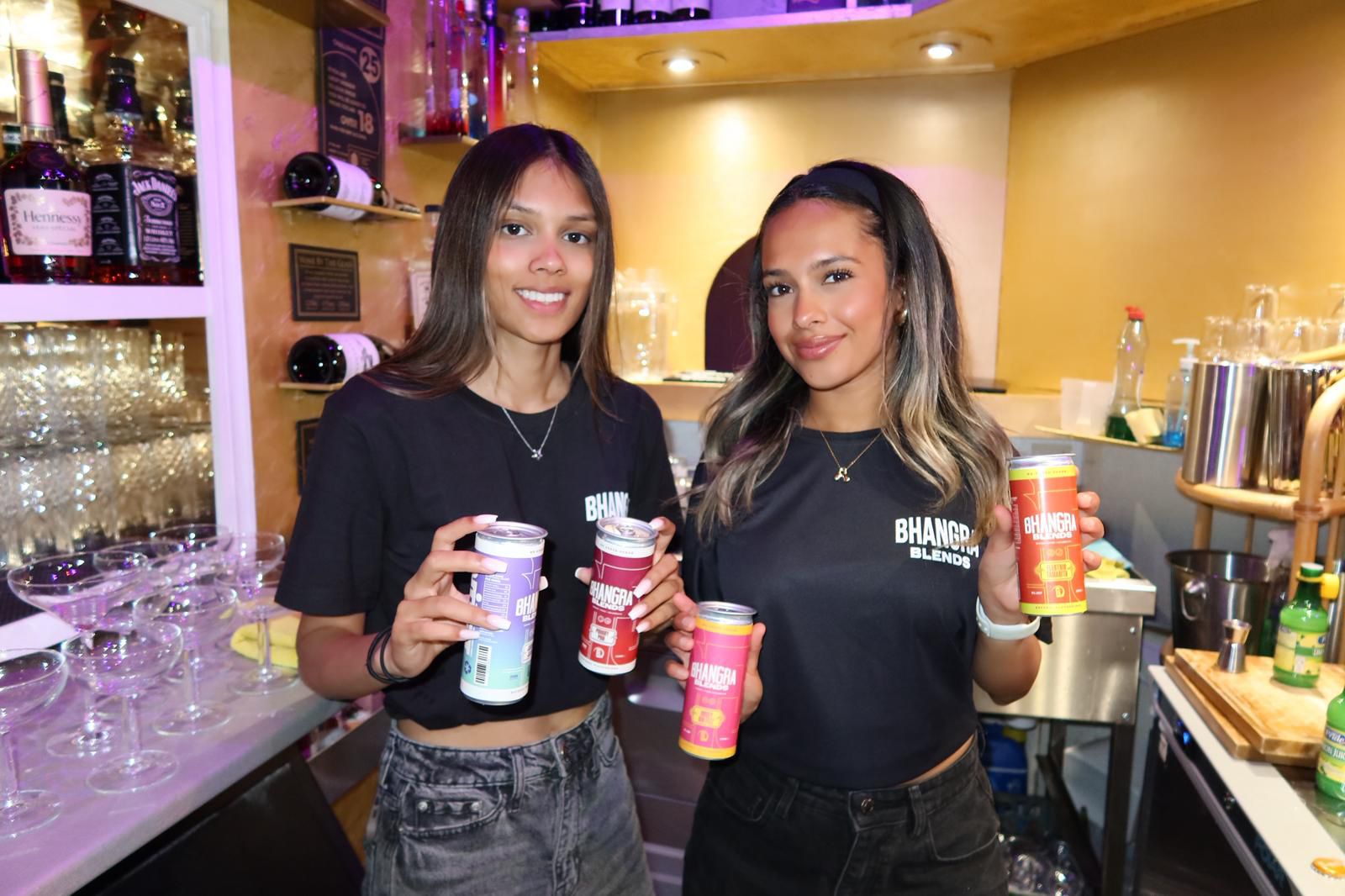
Arshia is the co-founder of Bhangra Blends, a premium ready-to-drink cocktail and mocktail brand bringing South Asian flavours into the modern UK drinks space. After leaving a corporate career at Microsoft, she set out, alongside her best friend, to build something that felt both culturally relevant and commercially viable, despite having no background in the drinks industry. Launched in 2025, Bhangra Blends sits at the intersection of heritage, moderation, and premiumisation, reflecting Arshia’s focus on building with intention. Her journey is as much about creating a scalable FMCG brand as it is about representation and opening doors for a more diverse next generation of founders.
Can you introduce yourself and share the journey that led you to where you are today?
I’m Arshia, co-founder of Bhangra Blends, a premium ready-to-drink cocktail and mocktail brand reimagining South Asian flavours for the modern UK consumer.
Before this, I worked at Microsoft. On paper, everything made sense – stable career, corporate structure, progression. But culturally, something felt missing. As a British South Asian woman, food has always been a huge part of my identity, yet I never saw those flavours reflected in the drinks space. South Asian cuisine is one of the most loved in the UK, but the drinks aisle told a very different story.
Bhangra Blends started from that gap. Neither my co-founder nor I came from the drinks industry. We learned from scratch manufacturing, margins, logistics, distribution. It wasn’t inherited knowledge. It was built.
Leaving Microsoft wasn’t impulsive; it was intentional. I wanted to build something culturally meaningful and commercially ambitious. This brand is deeply personal — it represents heritage, representation, and proof that women like us can build scalable FMCG businesses.
What were the pivotal stages in building your brand within the food, drink, or FMCG landscape?
The most pivotal stage was our first production run. Moving from concept to actual cans on a pallet completely shifts your mindset. It forces you to think commercially — shelf life, cash flow, minimum order quantities, forecasting.
Another defining stage was securing our first 50 stockists. Once accounts begin reordering, that’s when you know you’re not just a concept — you’re a product with demand. We launched in summer 2025 and secured 80-plus stockists within our first six months, which validated that this wasn’t just a cultural idea; it had commercial legs.
What defining moment shaped your approach to business or leadership?
Early on, we hired before we were truly ready. As two first-time founders who had never managed anyone before, that was a steep learning curve.
It taught me that leadership is not about delegation alone; it’s about clarity, structure, and setting expectations. As a small team of two, you do everything yourself first. That creates deep operational understanding, but it also forces you to grow personally.
I realised leadership isn’t about authority, it’s about responsibility. When something goes wrong, it sits with you. That shift made me more disciplined, more strategic, and far more intentional about growth.
Was there a particular commercial challenge or breakthrough that shifted your trajectory?
One of our biggest challenges has been visibility. FMCG is capital-intensive, and the brands with the largest budgets dominate shelf space and marketing channels. As an early-stage brand, we’ve had to compete creatively rather than financially. We couldn’t outspend, so we focused on differentiation. Instead of replicating classic cocktail profiles, we introduced flavour profiles that were completely new to the RTD category.
Our breakthrough came when accounts began reordering consistently. That’s when we knew we weren’t just a novelty – we were driving incremental purchase.
The FMCG space is highly competitive and margin-sensitive. How do you approach growth – commercially and personally?
Commercially, we are disciplined. Every production decision, distributor conversation, and retailer listing is evaluated through margin and scalability. Growth for us isn’t just volume – it’s sustainable volume.
Personally, growth means resilience. You need emotional stamina in FMCG. Retail negotiations can fall through. Production timelines can shift. You have to separate ego from execution.
How do you balance brand positioning, scale, distribution, and profitability?
We never chase scale at the expense of brand positioning. Being premium and culturally differentiated is our moat. Distribution is important, but it must align with margin and brand equity. We prioritise accounts where we can maintain pricing integrity rather than racing to the lowest cost channel.
Profitability is a discipline from day one. We built with improving unit economics in mind so that scaling enhances margin rather than erodes it.
What does building with intention mean to you?
Building with intention means never losing sight of why you started. Bhangra Blends is more than a drink. It represents culture, identity, and representation in mainstream retail spaces.
In a category driven by volume and velocity, we build with purpose. Every flavour, campaign, and partnership reflects something about who we are. We don’t move for noise — we move for alignment.
How do you maintain quality, brand integrity, and trust as you scale?
We are the face of the brand. Customers meet us at events. Retailers speak directly to us. That proximity keeps us accountable.
Quality is non-negotiable – from ingredient sourcing to packaging finish. As we scale, operational systems become more structured, but brand voice remains founder-led.
Resilience is critical in this sector. What have been your most valuable lessons navigating uncertainty?
Plan early and expect disruption. Supply chain delays happen. Retail timelines shift. Cash flow requires discipline.
We are not where we are because we figured everything out alone. We’ve leaned heavily on advisors, distributors, and fellow founders.
How do you balance ambition with wellbeing?
It’s challenging. Ambition in FMCG is relentless. What’s become non-negotiable for me are boundaries around mental clarity – structured planning days, protected time without operational noise, and honest conversations with my co-founder. Sustainable ambition requires energy management, not just time management.
What does legacy look like in your work?
Legacy for me is representation. I want young British South Asian women to see brands like ours in mainstream spaces and understand that they can build commercially serious businesses without diluting who they are.
Legacy is cultural permanence, not just commercial success.
Are you building for acquisition, disruption, or cultural impact?
Long-term category disruption and cultural impact.
We are building a culturally-led premium drinks brand that can scale nationally and internationally. If acquisition aligns with preserving the brand’s identity and scale ambitions, that is strategic – but the goal is to redefine what belongs in the mainstream RTD category.
What advice would you give to women building in FMCG?
Leverage your network early.
Manufacturing, funding, and retail partnerships are complex, and no one succeeds alone. Ask questions. Speak to founders ahead of you. Most people are far more generous with insight than you expect.
Website: https://bhangrablends.com/
Instagram: https://www.instagram.com/bhangrablends/