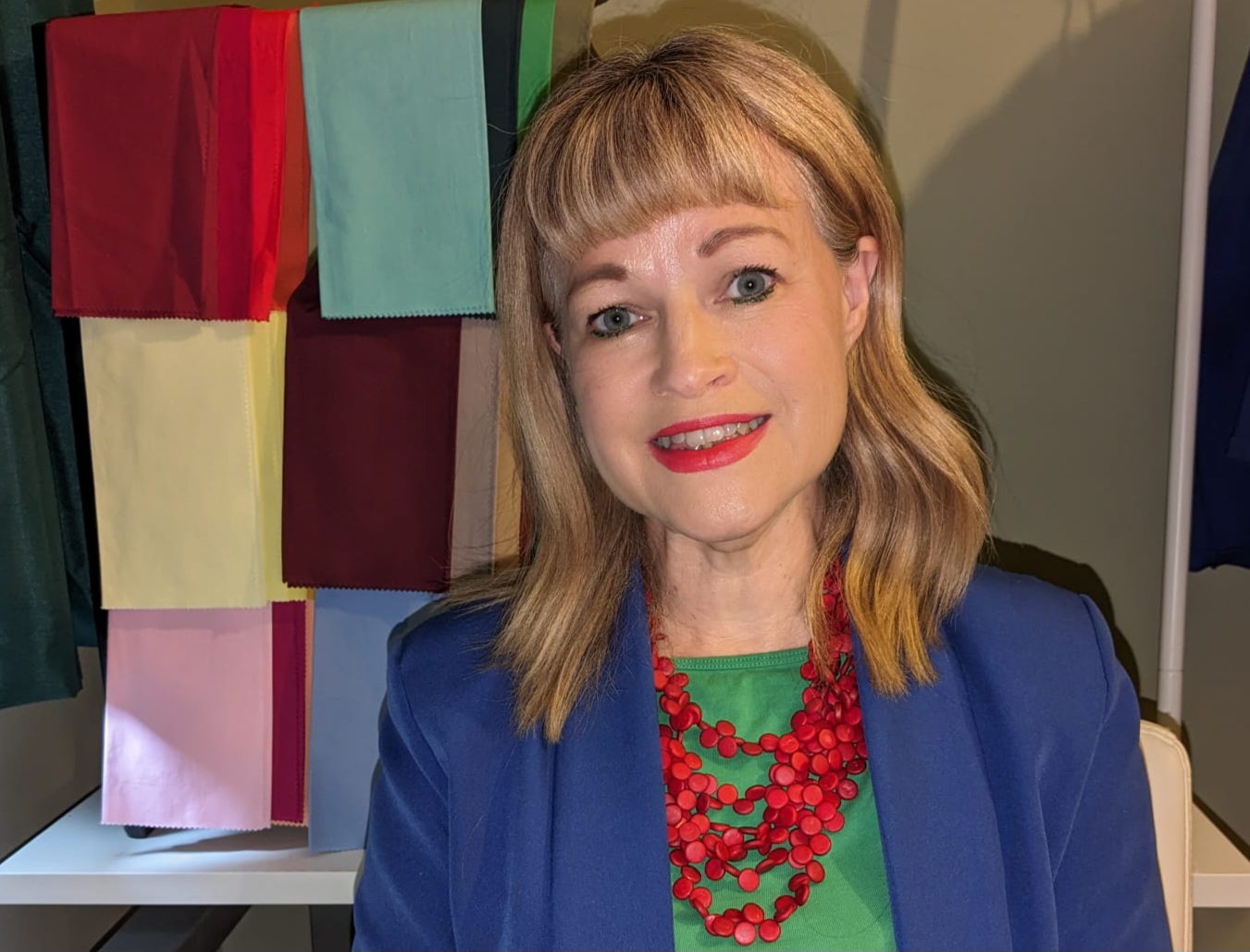
Charlotte Garbutt is the founder of transformEd styling by Charlotte, a sustainable styling and colour consultancy business. After her 30-year career working in primary and higher education, Charlotte embraced the idea that age is no barrier and set out in a brand new career direction. After qualifying in personal styling, colour analysis and fashion sustainability, she set up in business in 2023. Unlike some stylists in the industry, she situates transformEd styling by Charlotte within the well-being, rather than fashion, industry. With her brand values of empathy, diversity and sustainability, transformEd styling by Charlotte is a safe space where those of all genders can develop their confidence through clothing and colour. The business has the London College of Style sustainability kitemark, and Charlotte enjoys sharing her passion for slower fashion through talks, workshops, blogposts and her social media. Charlotte lives in East Yorkshire, and transformEd styling by Charlotte also offers remote services online.
Can you share a brief overview of your career journey and the key milestones that have led you to your current leadership role?
Before founding tranformEd styling by Charlotte, I had only ever worked in education. After gaining my PhD in Swedish literature, I moved to Hull in my late twenties and worked for around ten years as a lecturer in Scandinavian Studies. Following the closure of minority languages at the university, the next chapter in my career was as a qualified teacher working in primary schools in Hull and East Yorkshire. When the opportunity came, however, to combine my love of languages, my knowledge of primary education and my lecturing experience, I returned to the university as a lecturer in education. Mentoring students and later colleagues through my role as Senior Partnership Area Tutor provided me with a love of helping individuals to develop their skills and to build their self-confidence – qualities I’ve transferred to my styling business.
What do you believe are the most important qualities or attributes that a successful business leader should possess, and how do you embody them in your leadership style?
For me, leadership is about being an inspirational role model, about listening, about respect and about valuing what your team has to offer. Although I am a sole practitioner, I have many years of experience in leadership roles, where I advocated a distributed leadership style. The same qualities and values I brought to my leadership roles in education – empathy, trust, inclusion, support – are also at the fore with my work with clients with transformEd styling by Charlotte.
Can you describe a significant challenge or setback you’ve encountered in your career, and how did you overcome it to achieve your goals?
After starting work as a Scandinavian Studies lecturer, I thought that would be my career for life. Restructuring changes, however, meant that I had to decide whether to stay on as a lecturer but with different degree programmes or to turn my hand to something new. I seem to like a challenge! Leaving my lecturing post to retrain as a primary school teacher when I had two children of my own under five might seem like a rash move, but once I’ve chosen a path for myself I throw myself into it with gusto! I think it’s about using setbacks that are out of my control in my career as opportunities to re-empower myself. This is also true of my most recent decision to set up my business: when it’s me setting my own goals, it’s so much easier to work hard to achieve them.
In a rapidly changing business landscape, how do you stay informed about industry trends and adapt your strategies to remain competitive?
I’ve always loved learning as well as educating others so reading, in particular about sustainable approaches to fashion, isn’t a chore. Although the fashion industry has a terrible track record of damage to the environment and history of unethical approaches, consumer concerns are slowly emerging and there are many new developments in science and manufacturing which can help stem the tide of fast fashion. Who’d have thought we could make fabric from pineapples and water bottles?
What is your approach to building and leading high-performing teams, and how do you motivate your team members to achieve their best potential?
I’m a sole trader, so I no longer have teams to manage. When I was a leader, I was also a team player, and I like to think of my new networking contacts as colleagues – people to share mutual support and friendship with.
How do you balance short-term financial goals with long-term strategic planning for growth and sustainability of your business?
With no business experience behind me, deciding on the best short-term outlays to yield in the future is challenging. One of the best things I’ve found in the early days though is to give my time and to say yes to new contacts and opportunities.
Can you share an example of a major decision you had to make that had a significant impact on your organisation? What was the outcome, and what did you learn from the experience?
Originally, I founded two businesses so transformEd styling by Charlotte has a sister business, transformEd coaching, with the aim of offering educational and career coaching in schools. Schools don’t always have the budget for coaches, however, and the more I talked to teachers and school leaders, I found it was the colour analysis and styling they were interested in! I realised that I can use my coaching skills – showing curiosity, listening – through my styling work, so that’s what I’m focussing on.
What role does innovation play in your business strategy, and how do you foster a culture of innovation within your organisation?
Although I don’t style my clients using the latest runway styles, I think my business is very contemporary with its niche in sustainable fashion. One innovation I’m bringing to my business is the use of technology so that I will be able to offer remote colour analysis appointments with the same personalised service so clients can benefit from my expertise from anywhere in the world.
How do you handle ethical dilemmas and make difficult decisions when they arise in your role as a business leader?
Abiding by my own strong ethical principles is very important to me. Fashion sustainability isn’t just about considering the environmental impact, it’s also about the ethical side of the industry. It’s paramount that the fashion industry focuses on UN sustainable development goals ‘gender equality’ and ‘no poverty’ too. I’m a diversity advocate and want my business to reflect this, whether it’s helping a trans client with new styles to express their gender identity, advising a client on the best colours for her hijab or talking to wheelchair users about the barriers they face in the fashion industry.
Looking to the future, what are your top priorities and goals for your business, and what strategies do you plan to implement to achieve them?
My top priorities are to build up my client base further, and to become known locally and more widely as a sustainable styling expert. Leading more talks and workshops, which I love doing, and networking, are central to how I plan to fulfil my next steps.
https://www.instagram.com/transformedstyling/
https://www.facebook.com/profile.php?id=100083700150512