For the first time in history, business leaders are navigating an unprecedented cocktail of trends and complexities for which there are few leadership precedents. In the post-pandemic business environment, it’s becoming alarmingly common to see disengaged, unfulfilled employees. Some even report symptoms of clinical depression. Conventional career progression is losing its allure for many, even as high income and lifestyle expectations persist. These disruptors are driving staff turnover and impacting organisational performance. So, what is going on? And more importantly, how do you create a strategy that transforms these challenges into opportunities for a high-performance organisation with fulfilled individuals and teams?
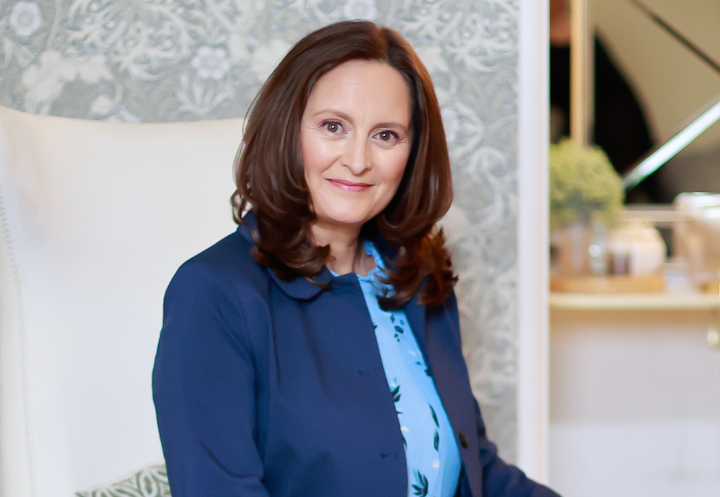
Sharon Strickland-Clark works with senior business leaders and teams to create enduring competitive advantage by harmonising vision, strategy, and execution. Here she explains what exactly is going on with your people?
Diagnosing the Symptoms
The temptation for many organisations is to focus on resolving surface-level symptoms – addressing turnover with retention bonuses, tackling disengagement with motivational workshops, or papering over collaboration issues with new technologies. While these responses can provide short-term relief, they rarely address the root causes. The truth is, what we’re seeing are systemic issues.
Understanding the Root Cause
Some time ago, author Daniel Pink observed that there’s often a mismatch between what science knows and what business does. This statement rings especially true when exploring the dynamics of today’s workforce. At the heart of these challenges lies a significant yet under-acknowledged factor: the multi-generational workforce.
Organisations today may include up to five distinct generations, from Traditionalists to Gen Z. The pace of change has amplified the diversity of life experiences, perspectives, and expectations between these groups. While this diversity can be a strength, it also presents unique challenges in communication, management, and collaboration.
Traditionalists and Boomers often value hierarchical structures and face-to-face communication. Meanwhile, Millennials and Gen Z lean towards transparency, flat hierarchies, and digital-first collaboration. These differing preferences can lead to misunderstandings, disengagement, and even outright conflict – especially during high-pressure scenarios like mergers, scaling, or organisational change.
The Generational Challenge in Action
Consider a mid-sized organisation undergoing a merger. Senior leaders rely on traditional decision-making methods, assuming these will translate to success. At the same time, younger employees expect a collaborative, transparent approach. The result? Employee dissatisfaction, misaligned expectations, and slowed integration. This is not just a generational issue; it’s a systemic one.
Recent research highlights the extent of these challenges. A survey by the London School of Economics and Protiviti found that 25% of employees reported low productivity, with younger generations disproportionately affected: 37% of Gen Z and 30% of Millennials compared to just 14% of Boomers. Additionally, employees with managers more than 12 years their senior were 1.5 times more likely to report low productivity. These statistics underline the impact of generational gaps on workplace efficiency and morale.
What Is Systemic Thinking?
Systemic thinking is about seeing the organisation as a living, interconnected system where patterns and dynamics shape outcomes. Instead of addressing isolated symptoms, systemic thinking looks at the relationships and interactions between elements – people, processes, and culture – to uncover root causes. It’s an approach that moves beyond quick fixes to create sustainable solutions.
Applying Systemic Thinking to the Multi-Generational Workforce
When applied to the challenge of generational diversity, systemic thinking provides a lens to understand how differences in expectations, communication styles, and values ripple through an organisation. It highlights areas where alignment is lacking and offers a framework for collaboration and resilience.
Here are three ways systemic thinking can help:
1. Establish an Inclusive Engagement Culture:
Create opportunities for all employees to share their perspectives and concerns. This builds mutual understanding and provides leadership with insights into workforce dynamics. This becomes a powerful way to inform strategy and decision-making.
2. Invest in Leadership Development:
Equip managers to lead effectively across generational divides. Programmes should emphasise emotional intelligence, adaptive communication, and fostering collaboration among diverse teams. This is not just a training exercise; it’s an investment in organisational cohesion and resilience.
3. Integrate Workforce Dynamics into Strategic Planning:
Ensure that decisions around growth, restructuring, or cultural change consider generational preferences and dynamics. This approach prevents misalignment and accelerates success.
An Invitation to Rethink Your Approach
As leaders, our role is not just to manage the present but to create the conditions for future success. Addressing generational diversity isn’t about solving isolated conflicts; it’s about unlocking the innovation and potential that come from a workforce united in purpose.
By adopting systemic thinking, we can:
● Strengthen collaboration across and within teams.
● Drive innovation by leveraging diverse perspectives.
● Build a unified, high-performing organisation that thrives in complexity.
If I’ve sparked your curiosity about how systemic strategies can transform your workforce challenges into opportunities, then I invite you to connect with me on LinkedIn and let’s start a conversation that helps you find practical ways to align your people and strategy.
LinkedIn:https://www.linkedin.com/in/SharonStricklandClark/
Email: sharon@stricklandclark.com
Website: https://stricklandclark.com